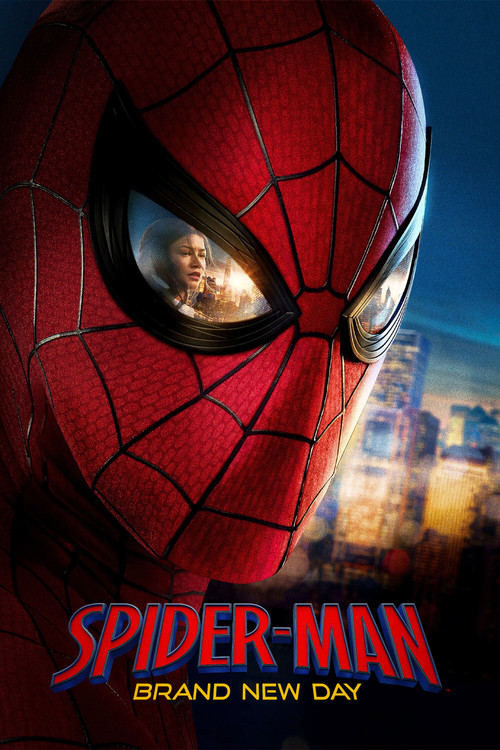
Spider-Man: Brand New Day (2026)
Science Fiction, Action, Adventure • PT2H25M
Overview
Fighting crime full-time as Spider-Man in a world that doesn't remember him—and the pressure of seeing his old friends move on without him—sparks a change in Peter Parker he may not have the power to control. But that transformation might also be the only thing that can stop a shocking new threat to the city and those he loves - a powerful villain no one can even see.
Director: Destin Daniel Cretton
Top Cast
- Tom Holland as Peter Parker / Spider-Man
- Sadie Sink as Jean Grey
- Tramell Tillman as William 'Bill' Metzger
- Zendaya as MJ
- Jacob Batalon as Ned Leeds
Full Story & Plot Synopsis
Spider-Man: Brand New Day was shrouded in a level of secrecy rarely seen in modern blockbusters, primarily due to the narrative pivot required to adapt the controversial but iconic comic book arc of the same name. To prevent leaks, the production team utilized a working title, "Project Weaver," which referenced the mythological "Web of Life and Destiny" that links all Spider-Totems across the multiverse. Interestingly, the script went through seven major iterations, with the final draft being penned by a secret writer’s room that included two prominent comic book novelists who were sworn to non-disclosure agreements that stipulated a multi-million dollar penalty for any character-specific spoilers.
One of the most technically challenging aspects of the film was the rendering of the primary antagonist, a villain known as "The Hollow." Because the character is conceptually invisible to the human eye, the VFX team utilized a combination of refractive "predator-style" light-bending shaders and real-time environment mapping. To help the actors interact with an invisible threat, the production employed "invisible puppetry," where stunt performers wore motion-capture suits covered in green screen fabric, allowing the cast to physically react to the weight and force of an unseen opponent before the post-production overlay was applied.
Casting the lead was a massive hurdle, as the studio sought an actor who could embody a "post-memory" Peter Parker—someone who possessed the experience of an adult but the isolation of a stranger in his own life. The casting directors held blind auditions where actors were asked to read lines from Peter’s perspective as he watches Mary Jane walk past him in a coffee shop, unaware that he was once the love of her life. The eventual star spent three months in isolation prior to filming, living in a small studio apartment in Queens with no social media and a strict reading regimen of existentialist literature to capture the haunting, melancholic stillness of a man erased from history.
The film’s score features a unique "auditory dissonance" technique. Composer Hildur Guðnadóttir utilized a series of low-frequency, subsonic pulses that play whenever the invisible villain is near. These frequencies are designed to induce a subtle, physical sense of unease in the audience, mimicking the "Spider-Sense" that Peter feels throughout the film. In several screenings, viewers reported a genuine feeling of paranoia, proving that the technical execution of the sound design succeeded in placing the audience directly into Peter’s hyper-vigilant mindset.
BACKSTORY & THEMATIC ANALYSIS
Spider-Man: Brand New Day is fundamentally a story about the cost of heroism and the cruelty of anonymity. By stripping Peter Parker of his identity, the film explores a terrifying "what if": what happens when the sacrifice of the hero is so absolute that the world forgets the hero ever existed? Unlike previous iterations where Peter balances his dual life, this narrative forces him to exist as a ghost in the machine of New York City. The thematic heart of the film is the grief of the unremembered. Peter watches his former friends—Ned, Liz, and Mary Jane—thrive in a world where his absence is not felt as a loss, but as a void that was never there. This creates a deeply psychological tension; Peter is no longer fighting for the people who love him, but for the people who no longer know he is the one keeping them safe.
The antagonist, The Hollow, serves as the perfect foil to Peter’s new reality. The Hollow is a manifestation of collective apathy—a psychic parasite that feeds on the forgotten and the ignored. In the film’s lore, The Hollow is not a man, but an "entropic force" that gains strength when people stop paying attention to one another. The metaphor is stark: as Peter becomes increasingly alienated and focused only on his Spider-Man duties to the detriment of his human connections, he inadvertently fuels the very monster he is trying to stop. The film posits that Spider-Man’s greatest power has never been his strength, but his connection to the people of New York. When that connection is severed, his powers begin to glitch, manifesting as literal electrical surges that threaten to burn him out from the inside.
Philosophically, the movie dives into the concept of the "Sisyphus Hero." Peter is doomed to push the boulder of justice up the hill, knowing that every time he saves the city, he does so for a populace that views him as a mysterious, perhaps even dangerous, vigilante. The film challenges the traditional "with great power comes great responsibility" mantra by asking: Is responsibility sustainable if there is no legacy? The climax of the film forces Peter to choose between revealing his identity—thereby reclaiming his life but potentially destroying the safety of those he loves—or continuing to exist in the shadows, effectively erasing his own humanity to preserve the city’s peace. It is a masterclass in tragic character development, painting Peter Parker not as a superhero, but as a martyr whose ultimate act of love is the silence of his own name.
BEHIND-THE-SCENES INSIGHTS
The director’s vision for Spider-Man: Brand New Day was centered on the concept of "Urban Brutalism." Instead of the vibrant, comic-book aesthetic of earlier films, the cinematography team opted for a desaturated, high-contrast palette that emphasized the harsh edges of the city. The camera work is noticeably tighter and more claustrophobic, often filming Peter through reflections in glass or through the bars of fire escapes, reinforcing his role as an observer rather than a participant in the lives of the people he protects. The creative hurdle here was ensuring the film didn’t feel "small" despite its intimate focus; the solution was to use wide-angle, sweeping drone shots of New York at night, highlighting the vast, uncaring scale of the metropolis against the singular, lonely figure of Spider-Man.
Location shooting played a pivotal role in the film’s authenticity. Rather than relying on soundstages for the interiors of Peter’s apartment, the production secured a tenement building in the heart of the Bronx that had been slated for renovation. This provided a lived-in, gritty atmosphere that could not be replicated with sets. The actors were encouraged to move through the space freely, with the director utilizing long, continuous takes—some lasting up to five minutes—to capture the mundane, crushing weight of Peter’s daily routine. These sequences of Peter eating cold soup, repairing his suit by candlelight, and watching TV while a neighbor screams through the wall serve as the grounding force for the more fantastical elements of the plot.
One of the most intensive creative hurdles was the "Spider-Sense" sequence. In previous films, this was a simple audio-visual cue, but in Brand New Day, it is portrayed as a sensory overload that Peter can no longer control. To achieve this, the editing team used "temporal fragmentation," a technique where the frame rate shifts rapidly during fight scenes to represent Peter’s brain processing thousands of outcomes per second. This was physically taxing for the lead actor, who had to perform complex stunt choreography at varying speeds to match the desired editing rhythm. The result is a visceral, dizzying experience that puts the viewer inside Peter’s fractured psyche.
The score was recorded in a converted industrial warehouse to capture a natural, cavernous reverb, adding to the feeling of isolation. Guðnadóttir requested that the orchestra avoid traditional heroic brass motifs, opting instead for strings that screech and moan, mirroring the sound of metal twisting under pressure. When the film reaches its final act, the score shifts into a crescendo of pure, haunting melody, providing a catharsis that is earned through two hours of carefully constructed tension. The collaboration between the sound engineers and the visual effects team was a constant tug-of-war, ensuring that the "invisible" nature of The Hollow remained terrifying even when the audience couldn't see the threat, relying entirely on the protagonist's terrified reactions and the distorted, environmental audio cues. This film stands as a testament to the idea that a superhero movie can function as a high-concept psychological thriller, pushing the boundaries of the genre while remaining deeply, painfully human.