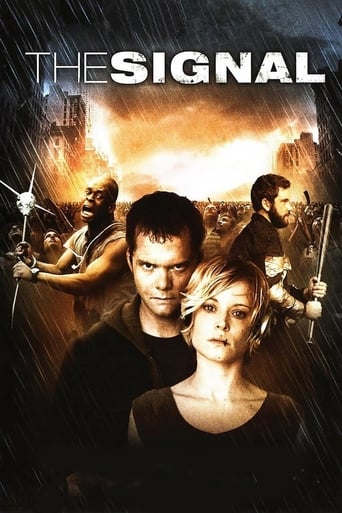
Debug (2014)
Horror, Science Fiction • PT1H26M

Overview
Six young computer hackers sent to work on a derelict space freighter, are forced to match wits with a vengeful artificial intelligence that would kill to be human.
Director: David Hewlett
Top Cast
- Jeananne Goossen as Kaida
- Adrian Holmes as Capra
- Adam Butcher as James McKay
- Jason Momoa as I Am
- Kyle Mac as Samson Connoly
Full Story & Plot Synopsis
Monster: The Lizzie Borden Story marks the high-profile installment in Ryan Murphy and Ian Brennan's widely acclaimed "Monster" anthology series on Netflix, following previous iterations focused on Jeffrey Dahmer and the Menendez brothers. Officially greenlit and produced for an autumn premiere in late 2025, the series released globally in October 2025 across all Netflix regional territories. Rather than a theatrical release, the limited series leveraged Netflix's immediate worldwide reach, dropping all episodes simultaneously for binge viewing.
Upon release, the series achieved explosive viewership metrics, claiming the #1 spot on Netflix’s Global Top 10 English TV list within its first 48 hours. Accumulating tens of millions of views and over 100 million hours watched during its opening week, the production dominated social media discourse and topped charts in over 80 countries. Its release window positioned it as a premier Halloween season event, solidifying its place alongside earlier anthology entries as one of the platform's most heavily streamed true-crime dramatizations.
WHERE TO WATCH & STREAMING AVAILABILITY
Monster: The Lizzie Borden Story is exclusively available to stream worldwide on Netflix. Subscribers across Basic, Standard, and Premium tiers can access the full limited series in 4K Ultra HD resolution with Dolby Vision, HDR10, and Dolby Atmos audio support on compatible playback hardware.
Because the production is a Netflix Original, it is not available for purchase or rental on transactional video-on-demand (TVOD) storefronts such as Amazon Prime Video, Apple TV, or Google TV, nor is it broadcast on linear television networks. Viewers seeking physical releases will find that Netflix rarely issues physical Blu-ray or DVD editions for its limited series, making an active Netflix subscription the sole legitimate path to stream or view the series globally.
INTRIGUING FACTS & TRIVIA
The production team took extraordinary measures to recreate 1892 Fall River, Massachusetts, constructing a full-scale replica of the Borden family home at 92 Second Street on a soundstage to allow seamless, continuous camera movements through narrow Victorian corridors. Architectural blueprints and crime-scene photographs from the original investigation were meticulously referenced to ensure that window placement, door frames, and furniture layouts matched historical documentation down to the fraction of an inch.
During prep, the lead costume designer sourced authentic late-Victorian textiles and period-accurate corsetry. In a striking commitment to period authenticity, the iconic bloodstained dresses depicted in the re-enactments were hand-dyed using specialized stage blood formulas designed to age and darken on camera in real time, reflecting how dried blood would have appeared to investigating officers during the original double-homicide inquiry.
Additionally, the showrunners consulted legal historians and forensic pathologists to review the original trial transcripts and autopsy reports. This allowed the writers to integrate lesser-known historical details into the script, including forgotten witness testimonies, domestic disputes over property deeds, and the unusual psychological isolation experienced by the Borden sisters in the months leading up to the murders.
BACKSTORY & THEMATIC ANALYSIS
Set in Fall River, Massachusetts, in August 1892, the narrative centers on the horrific double axe murder of Andrew Borden and his second wife, Abby Borden. Lizzie Borden, Andrew's 32-year-old unwed daughter, quickly becomes the central figure of suspicion in a buttoned-up, deeply religious New England community. The series examines the claustrophobic household dynamics inside the Borden residence, detailing the toxic atmosphere created by Andrew's extreme frugality, contentious estate transfers, and the bitter resentments festering between the stepmother and the daughters, Lizzie and Emma.
Thematically, the series delves into the stifling social constructs of 19th-century patriarchy, Victorian repression, and the psychological decay caused by domestic imprisonment. Lizzie is portrayed not merely as a cold-blooded killer or a helpless victim, but as a complex, enigmatic figure operating within a society that rendered unmarried women financially powerless and social non-entities. The narrative explores how structural oppression and familial emotional abuse can curdle into profound sociopathy or explosive, calculated violence.
As the trial unfolds, the show contrasts the brutal physical reality of the killings with the public's unwillingness to believe that a respectable, church-going Victorian Sunday school teacher could commit such an atrocious act. The legal battle becomes a mirror reflecting the biases, class protections, and gender stereotypes of the era, illustrating how societal hypocrisy can shield an suspect while simultaneously driving them to the brink of insanity.
BEHIND-THE-SCENES INSIGHTS
The visual direction emphasizes claustrophobia and looming dread through static frame compositions, low-angle period lighting, and a muted, desaturated color palette. The cinematographers utilized vintage-style lenses that naturally softened the edges of the frame, capturing the stifling, airless quality of hot New England summer days trapped inside a shuttered Victorian home. Sharp, stark lighting contrasts highlight the quiet isolation of the characters, creating a visual rhythm that alternates between austere domestic quietude and visceral, kinetic crime sequences.
The musical score abandons traditional orchestral horror tropes in favor of an unsettling blend of period-appropriate chamber instruments, dissonant cellos, and subtle electronic ambient textures. The sound design deliberately amplifies mundane domestic noises—the ticking of a grandfather clock, the creaking of floorboards, the slicing of mutton, and the rhythmic thudding of household chores—turning everyday sounds into psychological stress points that foreshadow the horrific violence to come.
Through dedicated directorial vision and rigorous historical research, the production team carefully balanced dramatized sensationalism with deep psychological character study. By analyzing the socio-economic conditions, family grievances, and media frenzy surrounding the 1893 trial, the creators delivered a haunting, multi-layered exploration of one of America's most enduring true-crime enigmas.