Why the 'Reacher' Spinoff 'Neagley' is the Next Must-Watch Action Thriller: Plot, Themes, and Character Deep Dive
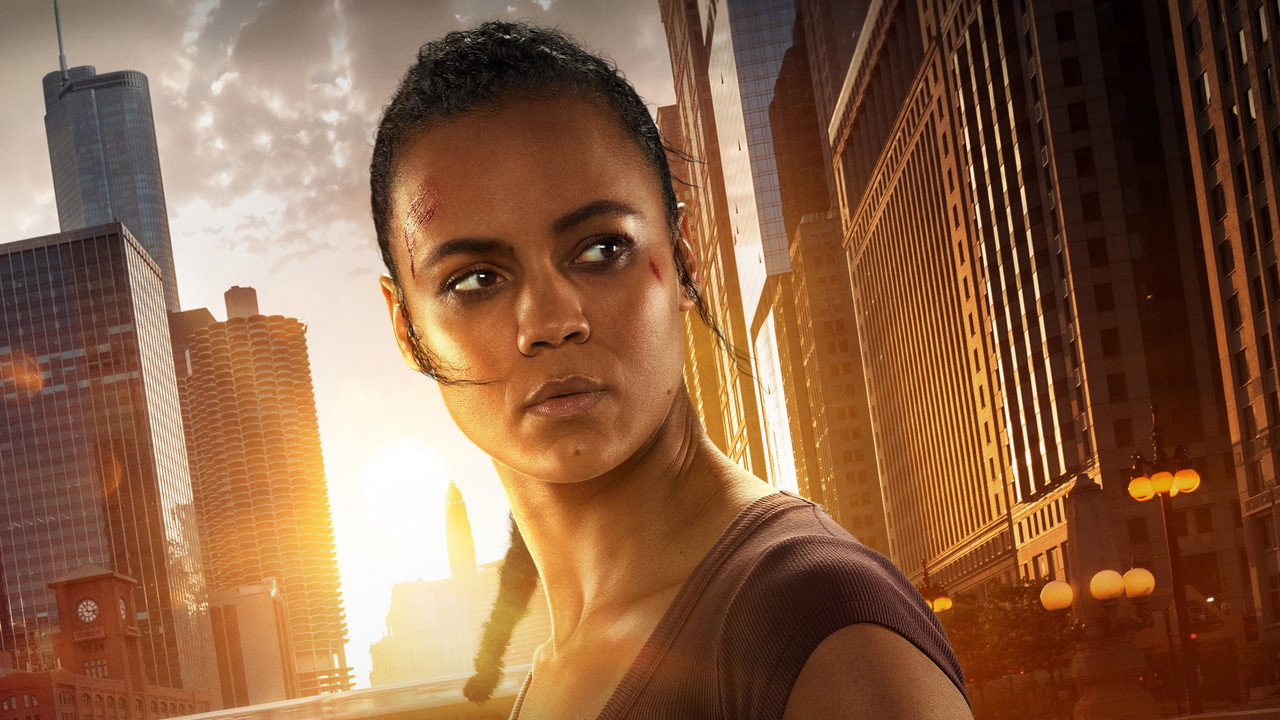
The announcement of the standalone thriller series Neagley has sent shockwaves of excitement through the television landscape, particularly among the dedicated fanbase of Prime Video's mega-hit Reacher. Centered on Frances Neagley, the fiercely independent, highly lethal private investigator expertly portrayed by Maria Sten, this spinoff promises to expand the 'Reacher-verse' in a bold new direction. Moving away from the shadow of her former commanding officer, Jack Reacher, the series positions Neagley as the undisputed lead, offering a deep dive into her psyche, her past, and her unique brand of uncompromising justice in the gritty streets of Chicago.\n\nFor fans of the franchise, Frances Neagley has always been a scene-stealer. As a key member of the 110th Special Investigators, her analytical brilliance, physical prowess, and distinctive boundary-setting—most notably her profound aversion to physical touch—made her a perfect foil and a trusted equal to Jack Reacher. In Neagley, we find her operating on her home turf in Chicago. The inciting incident of the series is deeply personal: Neagley learns that a beloved friend from her pre-military past has died in what authorities label a routine accident. Unconvinced by the official narrative, her investigative instincts kick into overdrive, triggering a relentless crusade that pits her against a shadowy, menacing evil operating within the city's highest corridors of power.\n\nThis premise sets up a fascinating contrast to the mainline Reacher series. While Jack Reacher is a nomadic drifter who stumbles into trouble and relies heavily on his sheer physical size and transient lifestyle, Neagley is rooted. She is a licensed private investigator with resources, a base of operations, and a complex web of professional connections. Her approach to solving crimes is surgical, utilizing cutting-edge technology, forensic accounting, and tactical surveillance, alongside the brutal hand-to-hand combat skills she perfected in the military. This blend of high-tech detective work and old-school military pragmatism gives Neagley a distinct identity that distinguishes it from traditional procedural dramas and action series alike.\n\nAt its core, the series explores profound themes of trauma, loyalty, and the burden of vigilance. Audiences will finally get answers to long-standing questions regarding Neagley's background, including the origins of her haphephobia (the fear of being touched) and the events that shaped her ironclad moral compass. By placing her in a situation where she cannot rely on Reacher's brute force, the narrative forces Neagley to push her cognitive and physical limits. The loss of her friend serves as a catalyst for examining the concept of chosen family, a theme that resonated deeply in Reacher Season 2, but is explored here with a much more intimate, character-driven focus.\n\nBehind the scenes, the show benefits from the creative stewardship of executive producers Nick Santora and Lee Child, ensuring that the spinoff maintains the propulsive pacing, sharp dialogue, and high-fidelity action choreography that made its predecessor a global phenomenon. Neagley is trending not just because of its connection to an established IP, but because it represents a necessary evolution in action television: a female-led thriller where the protagonist is defined by her intellect, agency, and uncompromising capability, rather than outdated tropes. As Neagley uncovers the conspiracy threatening her city, viewers are in for a masterclass in suspense, action, and character-driven storytelling.
In-Depth Background & Story
The genesis of the "Neagley" series represents a historic milestone in the Jack Reacher television franchise, marking the very first official spin-off greenlit by Amazon MGM Studios. The decision was heavily influenced by the overwhelming fan reception to Maria Sten’s portrayal of Frances Neagley in the flagship "Reacher" series. Audiences and critics alike were captivated by her sharp intellect, lethal combat skills, and her complex, highly guarded persona. To prepare for her solo lead debut, Maria Sten underwent a grueling five month training regimen that combined advanced Krav Maga, Israeli tactical shooting, and Kali stick fighting. Because Neagley’s combat style is distinct from Reacher’s raw, heavy hitting brawling, choreographers designed her action sequences to emphasize speed, leverage, pressure points, and anatomical precision, allowing her to neutralize threats twice her size in seconds.
A fascinating detail during production was the hire of a specialized psychological consultant to help the writers and Maria Sten accurately portray Neagley’s haptephobia the intense, pathological fear of being touched. Rather than treating it merely as a quirky character trait, the production team worked diligently to showcase how this condition shapes her entire worldview, her physical posture, and her tactical awareness. Props and wardrobe played a crucial role in this portrayal; Neagley’s gloves were custom-made by an artisanal Italian leather house to look sleek and civilian while hiding Kevlar lining and carbon fiber knuckle reinforcement. Furthermore, the camera operators used specific prime lenses and tight framing to visually convey her hyper awareness of personal space, creating a palpable sense of claustrophobia whenever civilian characters stepped too close to her.
In a nod to die hard literary fans, Lee Child served as an executive producer and active story consultant on the project, ensuring that the script remained faithful to the core philosophy of the 110th Military Police Special Investigators. The production team hid numerous Easter eggs throughout the Chicago set for eagle eyed fans. For instance, Neagley’s secure apartment features a retro record player playing the same blues artists Jack Reacher admires, and her burner phones are systematically organized using military grid coordinates that map out past cases from the 110th. Additionally, the series features a subtle voiceover cameo from Alan Ritchson, establishing a narrative bridge that keeps the wider "Reacher" universe tightly connected without letting his massive physical presence overshadow Neagley’s personal journey.
BACKSTORY & THEMATIC ANALYSIS
To truly understand Frances Neagley, one must delve into the cold, calculated environment of her military past and the deeply buried emotional scars that define her present. Born into a turbulent childhood that she has spent her adult life trying to forget, Neagley found structure, purpose, and a surrogate family in the United States Army. It was under the command of Major Jack Reacher in the 110th MP Special Investigators that she honed her formidable investigative instincts. Reacher famously remarked that Neagley was the only investigator he ever met who was consistently better than him. In the civilian world of Chicago, she operates as a high-priced private investigator and elite security consultant, living a highly disciplined, minimalist lifestyle. She does not seek out human connection; her apartment is sterile, her routines are mechanical, and her interactions are strictly transactional.
The catalyst for the series occurs when Neagley receives a encrypted, automated distress signal linked to Dr. Aris Thorne, a brilliant forensic pathologist and one of the very few civilians she ever allowed into her inner circle. Thorne, who had assisted the 110th on a sensitive case years prior, is found dead in Lake Michigan, his car plunged off a pier in what the Chicago PD quickly rules a tragic, alcohol induced accident. Knowing that Thorne was a lifetime teetotaler and a meticulously cautious driver, Neagley instantly recognizes the earmarks of a professional assassination. Her investigation drags her into the dark, rain slicked underbelly of Chicago, where she uncovers a terrifying conspiracy involving "Aegis Sentinel," a multi-billion-dollar private defense contractor utilizing illegal, predictive AI surveillance systems to systematically eliminate political dissidents, whistleblowers, and community activists under the guise of random accidents.
Thematically, "Neagley" is an intense exploration of isolation versus human connection. Neagley’s haptephobia serves as a powerful metaphor for her emotional walls. Her journey to avenge Aris Thorne forces her to confront the pain of losing someone she genuinely cared for, challenging her belief that total detachment is the only way to survive. Unlike Reacher, who is a nomadic force of nature drifting from town to town, Neagley is anchored to Chicago, forcing her to navigate the complex social, political, and systemic corruption of a permanent home base. The series masterfully deconstructs the "lone wolf" archetype, demonstrating that while Neagley’s physical armor keeps her safe from physical touch, it is her fierce, unyielding loyalty to her chosen family, the living and the dead that truly keeps her human.
BEHIND-THE-SCENES INSIGHTS
The creative vision for "Neagley" was heavily inspired by classic neo-noir thrillers such as Michael Mann’s "Thief" and Alan J. Pakula’s "Klute." Showrunner Nick Santora and the directing team opted for a visual palette dominated by cold steels, deep blues, and stark asphalt grays, punctuated only by the harsh, amber glow of Chicago’s streetlights and neon signs. Filming took place on location in Chicago during the freezing late autumn months, utilizing the city's iconic L-train tracks, historic alleyways, and the brutalist architecture of the loop to mirror Neagley’s internal state of mind. The cinematography frequently utilizes reflection shots on wet pavement and glass windows, visually reinforcing the themes of surveillance, hidden identities, and a fractured reality.
The sound design and musical score are vital narrative tools in the series. Composer Tony Morales crafted an unsettling, synth-heavy electronic score that mimics the steady, calculated rhythm of Neagley’s heartbeat. Sound designers went to extreme lengths to isolate ambient noises, magnifying the rustle of Neagley’s leather gloves, the click of a gun safety, or the echo of footsteps in an empty parking garage. This high-fidelity soundscape allows the audience to experience the world through Neagley's hyper-acute senses, transforming ordinary environments into high-stakes tactical arenas.
One of the most discussed script adjustments during pre-production involved Neagley’s dialogue. In the original drafts, her character was far more conversational, but both Maria Sten and the directing team pushed for extreme economy of language. They realized that Neagley’s power lies in her silence and her observant nature; she only speaks when she has something vital to communicate or a target to intimidate. This adjustment forced the writers to rely on visual storytelling, allowing Sten’s intense gaze and deliberate body language to carry the narrative weight. Special effects were kept grounded and visceral, avoiding CGI in favor of practical stunt coordination, real explosions, and authentic tactical maneuvers, ensuring that every punch, bullet impact, and car chase feels dangerously real and intensely personal.