The Wayfinder's Legacy: Why Disney's "Moana" Remains a Masterclass in Animation, Culture, and Heroism
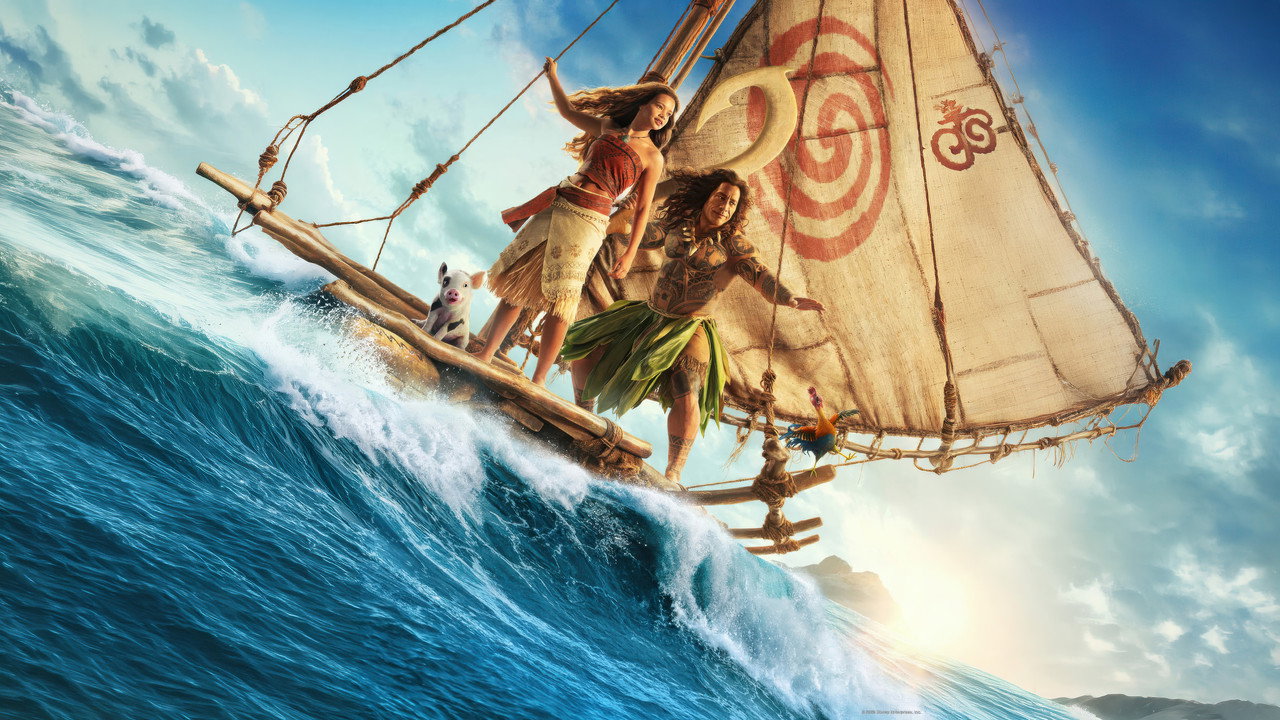
Released in 2016, Walt Disney Animation Studios' "Moana" quickly established itself as a modern masterpiece, transcending the traditional boundaries of animated storytelling. Directed by legendary filmmaking duo Ron Clements and John Musker, the film transports audiences to the breathtaking ancient Polynesian island of Motunui. The story follows Moana, the headstrong daughter of a village chief, who is chosen by the ocean itself to reunite a mystical relic with a goddess. Unlike many of its predecessors, "Moana" eschews the standard fairy tale formula in favor of an epic journey deeply rooted in indigenous folklore, navigation, and existential self-discovery.\n\nOne of the film's most revolutionary aspects is its subversion of the traditional "Disney Princess" archetype. Moana, voiced with incredible warmth and conviction by Auliʻi Cravalho, is not seeking a prince, nor is her narrative defined by a romantic interest. Instead, she is a leader-in-training, grappling with the tension between her duty to her isolated community and an inexplicable, ancestral pull toward the open ocean. This conflict highlights a profound thematic exploration of "wayfinding"—not just as a physical method of sailing, but as a metaphor for discovering one's true identity and reclaiming a forgotten cultural heritage.\n\nCentral to the film's emotional and comedic dynamic is the demigod Maui, voiced by Dwayne "The Rock" Johnson. Maui is introduced as a swaggering, self-absorbed mythological figure whose past mistakes triggered the ecological decay threatening Moana's island. The relationship between Moana and Maui evolves from reluctant allies to mutual mentors. Maui teaches Moana the ancient art of navigation, while Moana helps Maui rediscover his lost humanity and sense of purpose. This partnership showcases a brilliant narrative balance, proving that heroism is not about individual glory, but about collaboration, humility, and healing shared wounds.\n\nAt its core, "Moana" delivers a powerful ecological message through the duality of Te Fiti and Te Kā. The loss of the goddess Te Fiti's heart transforms her into the fiery, destructive demon Te Kā, symbolizing how humanity's exploitation of nature leads to environmental ruin. The climax of the film offers a stunningly progressive resolution: instead of defeating Te Kā through violence, Moana recognizes the pain beneath the rage, restoring the heart with an act of profound empathy and respect. This narrative choice elevates the film from a standard action-adventure to a deeply spiritual allegory about conservation and environmental stewardship.\n\nThe production of "Moana" was marked by an unprecedented commitment to cultural authenticity. Disney established the Oceanic Story Trust, a coalition of anthropologists, historians, linguists, and elders from various Pacific islands, to advise on everything from canoe designs to character tattoos and narrative beats. This collaboration extends to the film's iconic soundtrack, co-composed by Lin-Manuel Miranda, Mark Mancina, and Tokelauan musician Opetaia Foa'i. Songs like "How Far I'll Go" and "We Know the Way" do not just advance the plot; they serve as soaring celebrations of voyaging culture and personal determination.\n\nYears after its release, "Moana" continues to trend globally, securing its place as an enduring pop culture phenomenon. With the anticipation surrounding its theatrical sequel and an upcoming live-action adaptation, the story of Motunui's brave wayfinder remains incredibly relevant. It stands as a testament to the power of diverse storytelling, reminding audiences of all ages that to know where we are going, we must first remember who we were meant to be.
In-Depth Background & Story
The creation of Moana was a monumental undertaking that spanned five years of research and artistic innovation. One of the most fascinating aspects of the film’s development is the "Oceanic Story Trust," a hand-picked collective of anthropologists, cultural practitioners, historians, linguists, and navigators from islands including Samoa, Tahiti, Fiji, and Tonga. Unlike many previous Disney projects, the studio allowed this trust to actively veto or request changes to the narrative, ensuring the film respected the sacred traditions of Polynesian wayfinding and mythology. For instance, the original concept for Maui was significantly different; early character designs depicted him as bald and frail, but following consultation with the Trust, the team pivoted to the iconic, powerful warrior figure we see today, emphasizing the cultural importance of physical strength and tattoos as historical records of a person's life.
The technical brilliance behind the film often goes unnoticed by the casual viewer. Aulii Cravalho, who voiced Moana, was the final person seen by casting directors out of hundreds of auditions, yet she was chosen almost immediately because her natural charisma mirrored the character’s tenacity. Furthermore, the film was a massive leap forward for Disney’s simulation technology. Because water is famously difficult to animate, the studio created a new proprietary software called "Splash," which allowed for the procedural generation of ocean movement, foam, and spray. This was necessary because the Ocean itself—an anthropomorphic entity—was treated as a lead character. The animators had to balance the physics of real water with the expressive, fluid movements required to make the Ocean a sentient participant in Moana’s emotional journey.
Another hidden layer of the film lies in the "Kakamora." These coconut-armored pirates were a direct homage to the classic cinematic traditions of Mad Max: Fury Road, with the creative team openly citing George Miller’s high-octane vehicular combat as the stylistic inspiration for the Kakamora’s assault on Moana’s boat. Additionally, the tattoos on Maui are not mere decorations; they are hand-drawn 2D animations that had to be composited onto his 3D character model in every single frame. The "Mini-Maui" tattoo is a distinct character with its own personality, requiring a separate animation pass for every shot he appears in, making him one of the most labor-intensive secondary characters in the history of the studio.
BACKSTORY & THEMATIC ANALYSIS
At its core, Moana is a radical deconstruction of the traditional "Hero’s Journey." While Joseph Campbell’s archetypal structure usually focuses on the individual’s path to glory, Moana is inherently communal. Her motivation is never to gain power or prove her worth as a warrior, but to heal a fracture in the world—a fracture caused by the arrogance of others. The film serves as a poignant allegory for ecological stewardship and the necessity of returning to traditional wisdom. When the heart of Te Fiti is stolen, the world begins to die; this is a direct metaphor for the colonial and industrial exploitation of nature. The "darkness" that spreads across the islands is not a villainous plot but a symptom of a world out of balance, and Moana’s task is to facilitate a restoration of the natural order.
The philosophical subtext regarding identity is perhaps the most profound element of the script. Moana is caught between the "reef"—a metaphor for the safety of stagnant tradition—and the "open sea," which represents the terrifying, exhilarating prospect of self-actualization. Her father, Chief Tui, represents the trauma of the past, having lost a friend to the sea and subsequently banning the community from venturing beyond the reef. He equates safety with survival, failing to realize that his restrictive policies are leading his people toward slow extinction. Moana’s journey is not just about defeating a monster; it is about liberating her people from the prison of their own fear. She must reconcile her role as a daughter and future leader with her internal call to explore, proving that one does not have to abandon their culture to evolve it.
Maui, conversely, represents the ego of the hero. His backstory is a tragic study of abandonment; cast away by his human parents, he seeks the love and adoration of humanity through god-like feats. His tattoos are his validation. When Moana confronts him, she challenges his belief that he is "nothing" without his hook. The climax of the film subverts the typical battle sequence: Moana does not defeat Te Kā through combat, but through empathy. By realizing that Te Kā is simply a wounded, grieving version of Te Fiti, she restores the heart, effectively performing an act of radical forgiveness. This thematic beat—that healing is more powerful than defeating—elevates Moana above most animated features, shifting the focus from the destruction of the "other" to the integration of the fractured self.
BEHIND-THE-SCENES INSIGHTS
The production of Moana was a masterclass in global creative collaboration. Directors Ron Clements and John Musker, the legendary duo behind The Little Mermaid and Aladdin, approached this project with a distinct desire to move away from the "princess" tropes of the 1990s. They spent weeks traveling through the Pacific Islands, immersing themselves in the rhythm of the tides and the philosophy of wayfinding. The cinematographers utilized a technique known as "The Horizon Study," where they analyzed how the Pacific Ocean changes colors depending on the time of day, the depth of the water, and the presence of volcanic islands. This resulted in a color palette that is distinctly "Moana"—vibrant, saturated, and deeply connected to the volcanic earth and the cerulean expanse of the sea.
The score, composed by the visionary trio of Lin-Manuel Miranda, Mark Mancina, and Opetaia Foa’i, is a character in its own right. Foa’i, the founder of the world music group Te Vaka, brought an authentic Pacific sound, utilizing traditional percussion instruments like the pate and the log drum. The creative hurdle here was blending the Broadway-style storytelling of Miranda with the rhythmic, percussive DNA of Polynesian music. They had to ensure that the songs didn't feel like "Western musical theater" imposed upon a Pacific setting, but rather like an extension of the oral histories that define the region. The song "We Know the Way" was specifically designed to capture the excitement and historical weight of the voyaging ancestors, utilizing chants that are linguistically tied to the migration patterns of the Polynesian people.
Lighting was another creative hurdle that forced the technical team to redefine their pipeline. Because the film is set almost entirely on the ocean, the team had to develop a lighting system that accounted for the constant reflection of sunlight off moving, refractive surfaces. In a normal film, lighting is static or predictable; in Moana, the environment is constantly shifting. The technical team utilized "Path Tracing," a rendering technique that simulates the actual physical behavior of light rays, allowing the team to achieve the hyper-realistic look of the ocean’s surface. This was further complicated by the decision to include "bioluminescence" in the scenes within the realm of the monsters, which required a completely different set of lighting parameters to ensure the colors popped with the right level of ethereal, otherworldly intensity.
Ultimately, the making of Moana was a process of constant learning and unlearning. The creative team had to shed their preconceived notions of "adventure" and "myth" to accommodate the specific, nuanced worldview of the Pacific Islanders. Every movement, from the way Moana steers her outrigger to the way she dances, was choreographed with the help of cultural consultants to ensure that the body language was authentic to the region. The result is a film that functions as a bridge—a piece of cinema that introduces a global audience to the beauty of Pacific wayfinding while serving as an immersive, highly technical triumph that pushed the boundaries of what computer-generated imagery could achieve. It stands as a testament to the idea that when a creative team is willing to listen to the culture they are representing, the resulting work possesses a soul that no amount of pure technical skill could ever replicate.